
Buy Kisspeptin-10 online in Australia
The market for research peptides has been experiencing steady growth in Australia over the past few years, driven by increasing scientific interest in molecular biology, endocrinology, and metabolic research. Universities, private laboratories, and independent researchers are actively exploring synthetic peptides for their potential to help better understand complex biological signaling pathways. As a result, demand for reliable and high-purity compounds has expanded significantly across both domestic and international suppliers.
One of the search queries that frequently appears in this space is “Buy Kisspeptin-10 online in Australia”. This reflects a broader trend where researchers are looking for convenient access to specialized peptides through online vendors that can ship quickly to Australia while maintaining strict quality control standards. Factors such as product purity, batch testing, and supplier reputation have become key decision-making criteria for buyers navigating this niche market.
Kisspeptin-10 itself is a widely studied synthetic peptide in laboratory research contexts, particularly in relation to the reproductive hormone axis. It is derived from the endogenous kisspeptin protein and is commonly investigated for its role in stimulating the release of gonadotropin-releasing hormone (GnRH), which subsequently influences downstream reproductive hormones. Because of this, it has become a significant tool in studies related to puberty onset, fertility regulation, and neuroendocrine signaling pathways.
Table of Contents
What is Kisspeptin-10?
Kisspeptin-10 is a synthetic decapeptide derived from the naturally occurring KISS1 gene, which encodes a larger precursor protein that is enzymatically processed into several active fragments known as kisspeptins. Among these fragments, synthetic decapeptide is one of the most commonly studied due to its relatively short amino acid chain and strong biological activity in experimental models.
Functionally, Kisspeptin-10 acts as a potent agonist of the KISS1R receptor, also known as GPR54. This receptor is widely expressed in key regions of the brain involved in endocrine regulation, particularly within the hypothalamus. When synthetic decapeptide binds to KISS1R, it triggers intracellular signaling cascades that are central to reproductive hormone control.
A key biological role of Kisspeptin-10 in research is its ability to stimulate the GnRH (gonadotropin-releasing hormone) pathway, which subsequently influences the release of luteinizing hormone (LH) and follicle-stimulating hormone (FSH) from the pituitary gland. This signaling cascade is essential for the regulation of reproductive function and is often described as a central “switch” in the hypothalamic–pituitary–gonadal (HPG) axis.
Because of these properties, Kisspeptin-10 is widely used in laboratory research across several areas, including:
- Reproductive endocrinology studies, where it helps researchers examine hormone regulation mechanisms
- Fertility and puberty modeling, particularly in understanding the timing and activation of reproductive development
- Hormonal regulation pathway analysis, where it is used to map and study endocrine feedback loops within the HPG axis
Overall, Kisspeptin-10 serves as an important research tool for investigating how hormonal signaling networks are initiated and controlled in biological systems.
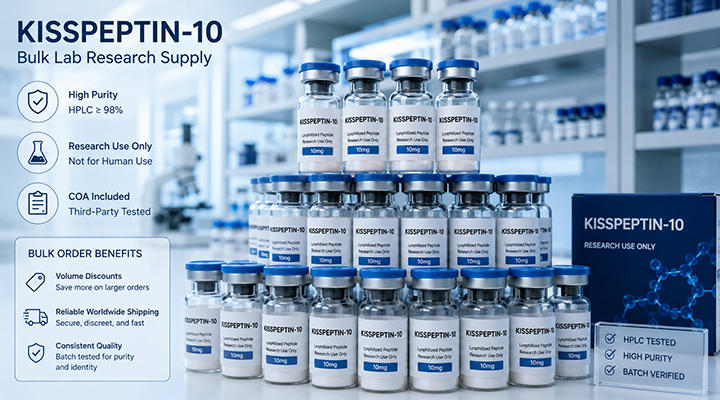
Description of Kisspeptin-10 Peptide
Kisspeptin-10 is a short synthetic peptide consisting of 10 amino acids, representing the C-terminal active fragment of the larger kisspeptin protein family encoded by the KISS1 gene. Despite its relatively small size, this fragment retains the essential biological activity required to interact with its target receptor and is therefore widely used in laboratory research focused on reproductive endocrinology.
In most research settings, synthetic decapeptide is supplied as a lyophilised (freeze-dried) powder, which enhances its stability during transport and storage. This physical form allows the peptide to remain chemically stable over extended periods when kept under appropriate conditions. For optimal preservation, it is typically recommended that Kisspeptin-10 be stored at -20°C, protected from moisture and repeated freeze-thaw cycles.
A defining characteristic of Kisspeptin-10 is its high affinity for the KISS1R receptor (also known as GPR54). This strong receptor binding capability is what makes it biologically active in experimental systems, as it effectively initiates downstream signaling pathways associated with endocrine regulation. Because of this potency, synthetic decapeptide is frequently used as a reliable tool for receptor activation studies.
Kisspeptin-10 Peptide Overview
Kisspeptin-10 is a synthetic peptide derived from the KISS1 gene and is widely studied for its role in regulating the hypothalamic–pituitary–gonadal (HPG) axis. By acting as an agonist of the KISS1R (GPR54) receptor, synthetic decapeptide helps researchers investigate reproductive hormone signaling, neuroendocrine communication, and hormonal feedback mechanisms.
In laboratory research, Kisspeptin-10 is primarily used to explore pathways involved in reproductive endocrinology, fertility regulation, puberty onset, and hormone-mediated signaling networks. Its well-characterized mechanism of action has made it a valuable tool in experimental studies focused on endocrine system function.
Typical Research Dosage
Research protocols involving Kisspeptin-10 vary considerably depending on study objectives, model type, and experimental design. Commonly referenced research ranges include:
- Approximately 1–2 mg administered daily in experimental settings
- Dosing schedules may differ based on protocol requirements
- Total peptide consumption is influenced by study duration and frequency of administration
Important Notes:
- Dosage requirements are always dependent on the specific research model and study design.
- Research peptide listings are intended strictly for laboratory and scientific purposes.
- Products labeled as Kisspeptin-10 are typically sold for research use only and are not intended for clinical or human use.
Price Reference – leolab.co.za
Researchers seeking Kisspeptin-10 can find the peptide available through online suppliers such as leolab.co.za.
Buy Kisspeptin-10: Pick the Right Vial
Any peptide, including Kisspeptin-10, should be used within 4 weeks (ideally) and no longer than 6 weeks, as its potency cannot be guaranteed beyond this period.
With this in mind, I’ve created a table to help you select the right peptide vial based on three key criteria:
- Your weekly dosage
- The strength of the vial
- The optimal cost per month
This way, you can make an informed decision that balances effectiveness, convenience, and value.
| Dosage (vial) | Price (leolab.co.za) | Who this option is suitable for | Estimated monthly cost (AUD) |
|---|---|---|---|
| 5mg Kisspeptin-10 | 85.00 AUD | Suitable for low-dose or short-cycle research protocols, or users testing Kisspeptin-10 for the first time in controlled laboratory settings. | ~170–340 AUD/month (based on typical 1–2 vials/month usage depending on weekly dosing design) |
The 5mg vial is often selected as an entry-level option for smaller-scale research projects and preliminary experimental protocols.
Shipping Considerations
When ordering from international suppliers, researchers should take several factors into account:
- International shipping fees may affect the final purchase cost.
- Delivery times can vary depending on destination and customs processing.
- Currency conversion rates may fluctuate over time, impacting the effective AUD cost of an order.
- Larger orders may qualify for bulk discounts or promotional offers that reduce overall expenses.
As with any research peptide purchase, pricing and availability should be verified directly on the supplier’s website prior to ordering, as product listings and shipping costs may change over time.
How to Save Money When Buying Kisspeptin-10 Online
When purchasing research peptides such as Kisspeptin-10 online, pricing can vary significantly depending on supplier, quantity, and available promotions. Many vendors structure their pricing in ways that reward larger orders and repeat customers, making it possible to reduce overall cost with a strategic approach.
Bulk Order Discounts
One of the most common ways to reduce cost per vial is through tiered bulk pricing. Most online peptide suppliers automatically apply discounts at checkout based on order volume.
Typical discount structures include:
- 2–3 vials: small introductory discount, often around ~5% off total order value
- 3+ vials: higher-tier pricing, potentially reaching up to ~10% discount depending on the supplier
In many cases, these discounts are automatically applied at checkout, meaning no coupon code is required. This makes bulk purchasing a convenient option for repeat or long-term research use, especially in laboratories that require consistent peptide supply.
Promo Code Savings
In addition to bulk pricing, many suppliers offer limited-time promotional codes or exclusive discounts through partner websites or campaigns.
For example:
- Promo code: HCS-P1-10
- Discount: 10% off at checkout
- Source: hcs-pharma.com campaign offer
These types of codes are often used for seasonal promotions or affiliate partnerships and may apply to specific products or entire catalog orders, depending on vendor terms.
Combined Savings Strategy
In some cases, researchers can further reduce overall costs by combining multiple discount mechanisms, depending on supplier policy.
A common cost-optimization approach includes:
- Placing a bulk order to unlock tiered pricing
- Applying a promo code (e.g., 10% discount) at checkout if supported
- Planning purchases in advance to consolidate multiple small orders into one larger shipment
This “stacked savings” approach can be particularly effective for repeat buyers who require ongoing access to Kisspeptin-10 for extended research projects.
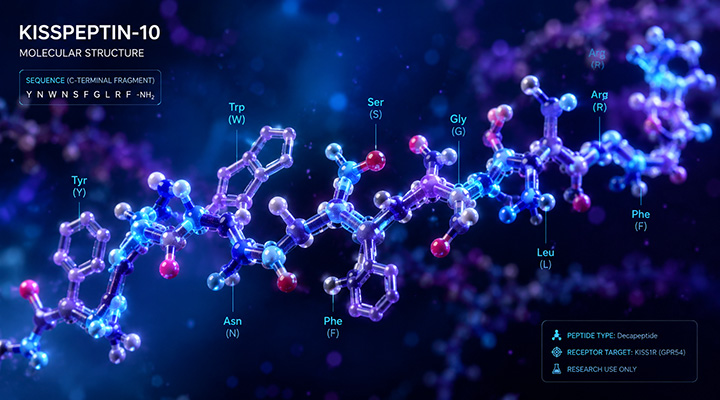
Independent Laboratory Testing & Quality Assurance
In the research peptide supply chain, independent laboratory testing and quality assurance play a critical role in ensuring that products meet expected standards of purity, identity, and consistency. Because peptides such as Kisspeptin-10 are used in sensitive experimental environments, even minor variations in composition can significantly affect research outcomes. For this reason, reputable suppliers place strong emphasis on third-party verification and transparent documentation.
Importance of Third-Party Testing in the Peptide Supply Chain
Third-party testing refers to analytical verification performed by an independent laboratory that is not affiliated with the manufacturer or seller. This practice helps reduce bias and provides an additional layer of confidence in product quality.
In the context of research peptides, third-party testing is especially important for:
- Confirming molecular identity
- Verifying stated purity levels
- Detecting impurities or incomplete synthesis byproducts
- Ensuring batch-to-batch consistency
For researchers, these factors are essential for reproducibility and reliability in experimental results.
Common Verification Methods
Several analytical techniques are commonly used to evaluate peptide quality:
• HPLC (High-Performance Liquid Chromatography) purity testing
HPLC is the most widely used method for assessing peptide purity. It separates components in a sample and quantifies the proportion of the target peptide versus impurities. High-quality research peptides typically report purity levels of 98–99% or higher.
• Mass spectrometry confirmation
Mass spectrometry is used to confirm the exact molecular weight and structure of the peptide. This ensures that the synthesized compound matches the intended amino acid sequence, such as Kisspeptin-10, without unexpected modifications.
Together, these methods provide a comprehensive assessment of both purity and identity.
What to Look for in Credible Suppliers
When evaluating peptide vendors, researchers typically look for transparent and verifiable quality documentation, including:
- Batch-specific Certificates of Analysis (COAs)
These documents confirm the results of purity and identity testing for each individual production batch, rather than generic or reused reports. - Independent laboratory verification statements
Some suppliers go further by explicitly stating that testing was conducted by third-party analytical laboratories, adding an extra layer of credibility.
Quality Claims Used by Suppliers
Many Australian and international peptide vendors highlight quality assurance through marketing and product documentation. Common phrases include:
- “Third-party tested”
- “COA included per batch”
- “HPLC verified purity”
- “Mass spectrometry confirmed”
While these claims are widely used across the industry, researchers are generally advised to verify that supporting documentation is actually accessible and batch-specific.
Conclusion
Kisspeptin-10 is a short but highly active decapeptide derived from the KISS1 gene, widely used in laboratory research to study reproductive hormone signaling and neuroendocrine regulation. Its ability to activate the KISS1R (GPR54) receptor and stimulate the GnRH → LH/FSH pathway makes it a valuable tool in reproductive biology, fertility studies, and broader endocrine research.
In Australia, Kisspeptin-10 is typically purchased through online research peptide suppliers that offer domestic and international shipping options. Buyers generally evaluate vendors based on HPLC-tested purity, availability of batch-specific COAs, and transparent “research use only” compliance labeling, ensuring consistency and reliability for experimental use.
Pricing structures vary depending on supplier and order volume, with bulk discounts and promotional codes often available. These include tiered savings for larger orders as well as occasional promotional offers that reduce overall cost for repeat or bulk purchasers.
Equally important is the role of independent laboratory testing, where methods such as HPLC and mass spectrometry help confirm peptide identity and purity. Reputable suppliers strengthen trust by providing batch-specific COAs and third-party verification claims, allowing researchers to make more informed procurement decisions.
FAQ — Buy Kisspeptin-10 Online in Australia
-
What is Kisspeptin-10?
Kisspeptin-10 is a synthetic 10-amino-acid peptide derived from the KISS1 gene, widely used in laboratory research. It acts as an agonist of the KISS1R (GPR54) receptor and is primarily studied for its role in stimulating the GnRH → LH/FSH hormonal pathway, which is central to reproductive endocrine regulation.
-
Where can I Buy Kisspeptin-10 online in Australia?
Kisspeptin-10 can be purchased through online research peptide suppliers that ship to Australia. One commonly referenced supplier is:
* leolab.co.za
Typical entry pricing for Kisspeptin-10 starts at approximately:
* ~AUD $85 per 5mg vial
All products are generally labeled for research use only and should be selected based on COA availability and purity testing.
-
What is the typical dosage of Kisspeptin-10 in research?
In laboratory contexts, synthetic decapeptide dosing varies by study design, but commonly referenced ranges include:
* Protocol-dependent experimental dosing (varies widely by model)
* Used strictly in non-clinical, research-only environmentsDosing is always adjusted based on experimental objectives, organism type, and study design.
-
How important is lab testing for Kisspeptin-10?
Independent laboratory testing is a key quality factor. Reputable suppliers provide:
* HPLC purity testing (≥98–99%)
* Mass spectrometry confirmation
* Batch-specific COAsSome vendors also advertise:
“Third-party tested”
“COA included per batch” -
Can I save money when buying Kisspeptin-10?
Yes, cost savings are usually available through:
* Bulk discounts (5–10% depending on quantity)
* Promo code:HCS-P1-10→ 10% off at checkout
* Combining bulk pricing with promotional codes (if allowed by supplier) -
What is Kisspeptin-10 used for in research?
Kisspeptin-10 is primarily used in:
* Reproductive endocrinology studies
* Fertility and puberty modeling
* Hormonal feedback and neuroendocrine pathway research -
How to get Kisspeptin-10?
You can obtain synthetic decapeptide by ordering online from research chemical suppliers such as leolab.co.za, which typically offers peptides in 5mg or 10mg lyophilised vials.
* HPLC-tested purity (≥98–99%)
* Certificate of Analysis (COA)
* Verified batch testing