
Buy PT141 online in Australia
PT141, also known as Bremelanotide, is a synthetic peptide that has been studied for its potential role in modulating sexual arousal pathways in the central nervous system. Unlike traditional compounds that primarily act through hormonal or vascular mechanisms, PT141 is believed to influence melanocortin receptors in the brain, particularly MC3R and MC4R, which are associated with sexual desire and motivational responses.
Originally developed as a derivative of earlier melanocortin-based research compounds, PT-41 has attracted attention in scientific and clinical research settings for its unique mechanism of action. Instead of directly affecting blood flow, it is thought to act on neural pathways involved in sexual stimulation, making it a subject of ongoing interest in both male and female sexual health studies.
Interest in PT141 has been steadily increasing worldwide, including in Australia, largely due to growing discussions around peptide-based research compounds and their potential applications. Online searches such as “Buy PT141 online in Australia” reflect this rising curiosity, driven by accessibility through international suppliers, expanding peptide research communities, and broader public awareness of experimental therapeutics.
Table of Contents
What is PT141 Peptide?
PT-141, also known by its pharmaceutical name Bremelanotide, is a synthetic peptide that has been studied for its effects on sexual arousal and desire through central nervous system pathways. Unlike many compounds that act on hormones or blood circulation, PT-141 is primarily researched for its neurological mechanism of action, targeting brain receptors involved in sexual motivation.
Definition of PT141 (Bremelanotide)
PT-141 (Bremelanotide) is a melanocortin receptor agonist developed from earlier peptide research into melanocortin-based compounds. It is classified as a cyclic heptapeptide and has been investigated for its potential role in modulating sexual response through central nervous system signaling rather than peripheral vascular effects.
Origin from Melanotan II Research
PT-141 was originally derived from research into Melanotan II, an experimental compound initially studied for tanning effects due to its interaction with melanocortin receptors. During this research, scientists observed that Melanotan II had unexpected effects on sexual arousal. PT-141 was later developed as a modified compound intended to isolate and refine these pro-sexual effects while minimizing unrelated pigmentation activity.
Mechanism of Action
PT-141 works differently from traditional treatments that focus on hormones or blood flow. Instead, it is believed to act on the brain by activating specific melanocortin receptors:
- Activates melanocortin receptors (MC3R / MC4R)
PT-141 binds primarily to MC3R and MC4R, which are associated with neural pathways regulating appetite, motivation, and sexual behavior. - Central nervous system mechanism (not blood flow-based)
Unlike PDE5 inhibitors, PT-141 is thought to influence sexual response through brain signaling pathways, affecting desire and arousal at a neurological level rather than directly altering vascular function.
Key Research Applications
PT-141 has been explored in various clinical and experimental contexts, particularly related to sexual health:
- Libido and sexual desire studies
Investigated for its potential role in increasing sexual desire in both male and female subjects under controlled research conditions. - Hypoactive Sexual Desire Disorder (HSDD) research
Studied in relation to HSDD, particularly in women, where reduced sexual desire is a clinically recognized condition. - Male and female sexual function research
Examined for broader effects on sexual arousal response, including differences in efficacy and response patterns between sexes.
PT141 Peptide Dosage
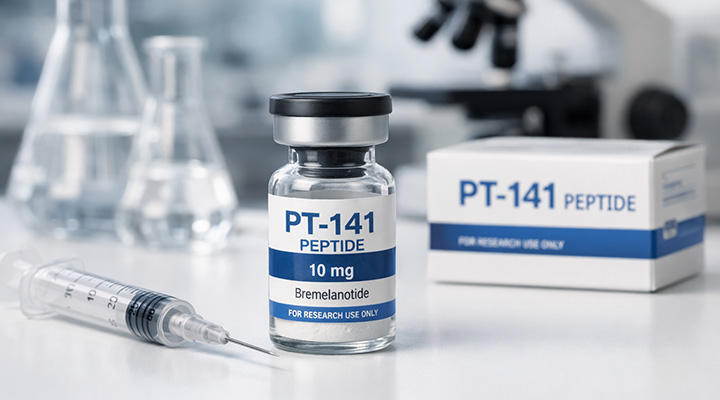
PT141 (Bremelanotide) dosage information is typically derived from clinical and experimental research settings, where it has been evaluated for its effects on sexual arousal pathways. As with most peptide compounds studied in controlled environments, dosing is not universally standardized and may vary depending on study design, subject response, and administration protocols.
Commonly Referenced Dosage Ranges
In published research and clinical observations, PT-141 has been explored within a range of relatively low, on-demand doses:
- Low dose: approximately 0.5 mg
Often referenced as a starting point in experimental settings to assess individual sensitivity. - Standard on-demand range: approximately 1.0–2.0 mg
This range is commonly cited in studies examining acute effects on sexual desire and arousal response. - Frequency: typically used as needed rather than daily
PT-141 has generally been evaluated in “on-demand” protocols, meaning it is administered prior to anticipated activity rather than as a continuous daily regimen.
Administration Method
- Subcutaneous injection is the most commonly referenced administration route in research literature.
This method is used to allow systemic absorption and interaction with central nervous system pathways.
Other administration routes have been explored historically, but subcutaneous delivery remains the most consistently documented in clinical contexts.
Notes on Variability
Responses to PT-141 can differ significantly between individuals due to biological and neurological variability. Key factors include:
- Differences in receptor sensitivity (melanocortin receptor response)
- Individual metabolic and neurological differences
- Variations in study protocols and subject populations
Because of this variability, outcomes in research settings are not uniform, and dosing is typically adjusted within controlled environments under study supervision.
PT141 Price Overview
PT-141 (Bremelanotide) 10 mg vials are sold across various international research peptide suppliers, and pricing can vary significantly depending on purity claims, manufacturing standards, and batch testing transparency. In general, the global market shows a wide range of pricing for research-use PT-141, typically influenced by region, supplier reputation, and included documentation such as Certificates of Analysis (COA).
Buy PT141: Pick the Right Vial
Any peptide, including PT141, should be used within 4 weeks (ideally) and no longer than 6 weeks, as its potency cannot be guaranteed beyond this period.
With this in mind, I’ve created a table to help you select the right peptide vial based on three key criteria:
- Your weekly dosage
- The strength of the vial
- The optimal cost per month
This way, you can make an informed decision that balances effectiveness, convenience, and value.
| Dosage (Vial Size) | Price (leolab.co.za) | Who This Option Is Suitable For | Estimated Monthly Cost (AUD) Based on Weekly Usage |
|---|---|---|---|
| 10 mg PT-141 vial | 85.00 AUD | Suitable for users following low-intensity or introductory research protocols, typically testing sensitivity or starting with minimal weekly exposure (e.g., ~0.5 mg per week) | ~17.00 AUD/month (0.5 mg/week → ~2 mg/month → ~5 months per vial) |
leolab.co.za Pricing
At leolab.co.za, PT-141 10 mg is listed at approximately:
- 85.00 AUD per 10 mg vial
This price represents a straightforward per-vial cost before considering additional purchasing factors such as currency fluctuation and logistics.
When positioning this within the broader international range, this places the product in a mid-to-premium pricing tier, likely reflecting supplier sourcing, quality positioning, and regional distribution structure.
Factors That Affect Final Cost in Australia
Even when a base price is clearly stated in AUD, the final amount paid by customers in Australia may vary due to several external factors:
- Exchange rate fluctuations
International peptide pricing is often tied to USD, EUR, or ZAR conversions, meaning AUD pricing may shift over time. - Shipping costs to Australia
International delivery fees, courier selection, and parcel insurance can significantly affect total checkout cost. - Possible taxes or import fees
Depending on Australian customs processing, additional charges may apply upon entry, particularly for internationally shipped research compounds.
How to Save Money When Buying PT141 Online
When purchasing PT-141 (Bremelanotide) 10 mg vials from online research suppliers, pricing can vary significantly depending on quantity, supplier policies, and available promotions. Understanding how pricing structures work can help reduce overall cost per vial.
Bulk Discount Structure
Many online peptide suppliers use tiered pricing systems, where the unit price decreases as the order volume increases. This is one of the most effective ways to reduce total spending.
Typical examples of bulk discount tiers may include:
- Buy 4 vials → ~5% discount
- Buy 10 vials → ~10% discount
In some cases, higher-volume orders may unlock even greater savings or wholesale-style pricing, depending on the vendor’s checkout structure. These discounts are usually automatically applied during checkout when the required quantity threshold is reached.
Promo Code Savings
In addition to bulk pricing, many suppliers offer limited-time or partner-based discount codes that further reduce the final cost.
- Exclusive code:
HCS-P1-10 - Discount value: 10% off at checkout
- Applicable site: hcs-pharma.com
When combined with bulk purchasing, promo codes can significantly lower the effective price per vial, especially for larger orders.
Additional Cost-Saving Tips
Beyond direct discounts, there are several practical strategies buyers commonly use to reduce total purchase costs:
- Choose multi-vial packs instead of single vials
Bundled packaging is often priced more efficiently than individual unit purchases. - Look for seasonal promotions or bundle deals
Many suppliers run periodic sales, holiday discounts, or research bundle offers that reduce overall cost. - Compare multiple suppliers before purchasing
Pricing for PT-141 can vary widely between vendors, even for identical 10 mg vial specifications. Comparing listings helps identify better value options, especially when factoring in shipping and potential import costs.
Independent Laboratory Testing of PT141
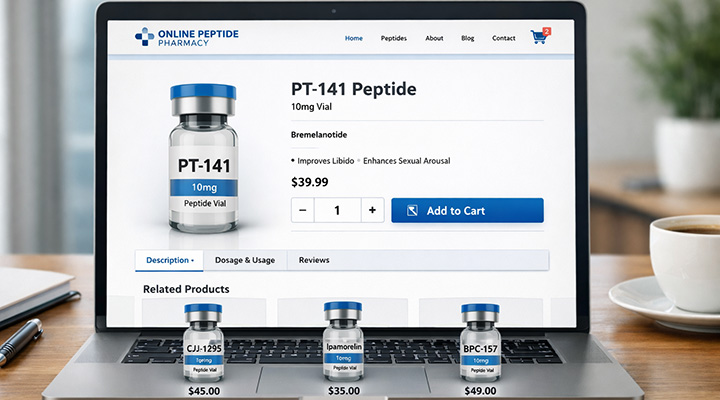
Independent laboratory testing is an important quality assurance step in the research peptide industry, particularly for compounds like PT-141 (Bremelanotide), where purity, identity, and batch consistency can vary between suppliers. Third-party verification helps provide transparency and confidence in the material being supplied for research purposes.
Why Lab Testing Matters
Independent testing serves several key functions in evaluating PT-141 quality:
- Confirms purity and identity of the peptide
Ensures that the substance being supplied is correctly identified as PT-141 and not a substituted or degraded compound. - Reduces risk of mislabeled or contaminated products
Helps detect impurities, incorrect formulations, or cross-contamination that may occur during manufacturing or handling. - Improves transparency between supplier and researcher
Verified analytical data allows buyers to assess product consistency beyond marketing claims.
Common Testing Methods
High-quality peptide analysis typically relies on established laboratory techniques:
- HPLC (High-Performance Liquid Chromatography)
Used to separate and quantify components in a sample, helping determine overall purity and detect impurities or byproducts. - LC-MS (Liquid Chromatography–Mass Spectrometry)
Combines separation and mass analysis to confirm molecular identity and structure with high precision, offering strong validation that the compound is indeed PT-141.
Typical Quality Standards
In many verified laboratory reports for PT-141, suppliers often aim to meet high purity benchmarks:
- ≥98–99% purity is commonly reported in third-party Certificates of Analysis (COAs) for high-quality batches
- Lower purity levels may indicate manufacturing variability or insufficient purification processes
While these figures are frequently cited, actual quality can vary between suppliers and production batches, making independent verification especially important.
Certificate of Analysis (COA)
A Certificate of Analysis (COA) is a key document used to verify peptide quality and should ideally be provided for each batch.
Important aspects include:
- Third-party verification
COAs are most reliable when issued by independent, accredited laboratories rather than in-house testing alone. - Batch-specific documentation
Each COA should correspond to a specific production batch, ensuring traceability and consistency. - Key analytical results
Typically includes purity percentage, molecular weight confirmation, and sometimes chromatograms from HPLC or LC-MS analysis.
Conclusion
PT-141 (Bremelanotide) continues to attract growing attention in Australia and internationally as interest in peptide-based research compounds expands. Its unique mechanism of action—targeting melanocortin receptors in the central nervous system rather than relying on hormonal or vascular pathways—has made it a notable subject in studies related to sexual arousal and desire.
The increasing number of searches for “Buy PT141 online in Australia” reflects this broader trend, driven by global accessibility through online research suppliers and rising awareness within scientific and peptide research communities.
However, as interest grows, several key considerations remain essential for anyone exploring PT-141:
- Verified suppliers are crucial to ensure product authenticity and reduce the risk of inconsistencies or contamination.
- Transparent lab testing, including third-party Certificates of Analysis (COAs), provides important confirmation of purity and identity.
- Understanding pricing and dosage context helps interpret product listings more accurately, especially given variations between suppliers, currencies, and research frameworks.
Overall, PT-141 sits within a rapidly developing segment of peptide research where demand, availability, and scientific curiosity continue to expand. At the same time, careful evaluation of sourcing quality and supporting documentation remains essential when reviewing options in this space.
FAQ (Frequently Asked Questions) – PT141
-
What is PT-41?
PT141 (Bremelanotide) is a synthetic peptide studied for its potential role in influencing sexual arousal pathways in the central nervous system. It works primarily by activating melanocortin receptors (MC3R and MC4R), which are associated with motivation and sexual response, rather than acting on blood flow or hormones.
-
Where does PT141 come from?
PT141 was developed from research into Melanotan II, a peptide originally studied for pigmentation effects. During early research, scientists observed unexpected effects on sexual arousal, leading to the development of PT-141 as a more targeted compound for studying sexual desire mechanisms.
-
How does PT-41 work?
PT141 is believed to act on melanocortin receptors in the brain, influencing neurological pathways related to sexual desire and arousal. Unlike PDE5 inhibitors, it does not primarily work through vascular dilation but through central nervous system signaling.
-
What is the typical dosage of PT141
In research settings, PT-141 is commonly referenced in the following ranges:
* Low dose: ~0.5 mg
* Standard on-demand range: ~1.0–2.0 mg
* It is typically studied as an “as-needed” compound rather than a daily-use substance. -
What is the price of PT-141?
Pricing varies depending on supplier, purity, and quantity. As a reference point:
* PT-141 10 mg vial at leolab.co.za: 85.00 AUD per vial
Final cost may vary depending on exchange rates, shipping fees, and possible import taxes. -
Is PT-141 tested for quality?
Many suppliers provide Certificates of Analysis (COA) based on third-party testing. Common analytical methods include:
* HPLC (High-Performance Liquid Chromatography)
* LC-MS (Mass Spectrometry) -
Is PT-141 legal in Australia?
Regulatory status may vary depending on classification and intended use. PT-141 is generally discussed in a research-use context, and users should be aware of local regulations before considering purchase or import.
-
Why do people search for PT-141?
Interest in PT-141 is growing due to:
* Expanding peptide research markets
* Online availability through international suppliers
* Scientific interest in non-hormonal sexual function pathways
* Increasing global awareness of melanocortin-based compounds