
Buy ARA-290 online in the US
ARA-290, also known as Cibinetide, has attracted increasing attention within the scientific community for its potential role in tissue protection, inflammation modulation, and nerve repair. As an erythropoietin-derived peptide, ARA-290 is being investigated in a variety of preclinical and clinical research settings, making it a sought-after compound among qualified research professionals and laboratories. As interest in peptide-based research continues to grow, researchers are placing greater emphasis on sourcing high-quality products from reputable suppliers.
This guide provides everything you need to know before buying synthetic peptide online in the US. We’ll cover what ARA-290 is, common research dosage information, current pricing, opportunities to save through quantity discounts and an exclusive promo code, and whether the product is supported by independent laboratory testing. Understanding these factors can help researchers make informed purchasing decisions while ensuring product quality and reliability.
The focus of this article is on purchasing ARA-290 from trusted US-based research peptide suppliers. By choosing reputable vendors that prioritize transparency, quality control, and verified testing, researchers can obtain products that meet the standards expected for laboratory research.
Table of Contents
What Is ARA-290?
ARA-290, also known as Cibinetide, is a synthetic peptide derived from the three-dimensional structure of erythropoietin (EPO). Unlike full-length erythropoietin, which primarily stimulates red blood cell production, synthetic peptide was designed to selectively activate the innate repair receptor (IRR)—a receptor complex associated with tissue protection and anti-inflammatory signaling. Because it does not significantly stimulate erythropoiesis, ARA-290 has become an important molecule of interest in biomedical research exploring tissue repair without the hematopoietic effects of EPO.
Researchers have investigated synthetic peptide across multiple experimental models due to its potential cytoprotective and immunomodulatory properties. While studies are ongoing, several research areas have attracted particular attention.
Neuroprotection
ARA-290 has been studied for its potential to protect nerve cells from damage caused by inflammation, ischemia, or injury. Experimental research suggests that activation of the innate repair receptor may help reduce cellular stress and support neuronal survival, making synthetic peptide a promising candidate for neuroscience research.
Anti-Inflammatory Effects
One of the peptide’s primary areas of investigation is its ability to regulate inflammatory responses. Preclinical studies indicate that ARA-290 may reduce the production of pro-inflammatory cytokines while promoting pathways involved in tissue recovery. These findings have generated interest in its potential role in research involving chronic inflammatory conditions.
Tissue Repair and Regeneration
ARA-290 is also being evaluated for its potential to support tissue healing following injury. Researchers are exploring how activation of tissue-protective signaling pathways may contribute to regeneration in organs and peripheral tissues while minimizing inflammatory damage.
Neuropathic Pain Research
Neuropathic pain is another major focus of ARA-290 research. Clinical and preclinical studies have investigated whether the peptide’s anti-inflammatory and neuroprotective properties could help improve nerve function and reduce symptoms associated with peripheral neuropathies. Although results have been encouraging in certain research settings, additional studies are needed to further understand its mechanisms and long-term effects.
Research Use Only: ARA-290 is intended exclusively for laboratory and scientific research. It has not been approved by the U.S. Food and Drug Administration (FDA) for human therapeutic use, and it should not be used for self-medication, diagnosis, treatment, or disease prevention.
ARA-290 Dosage Information
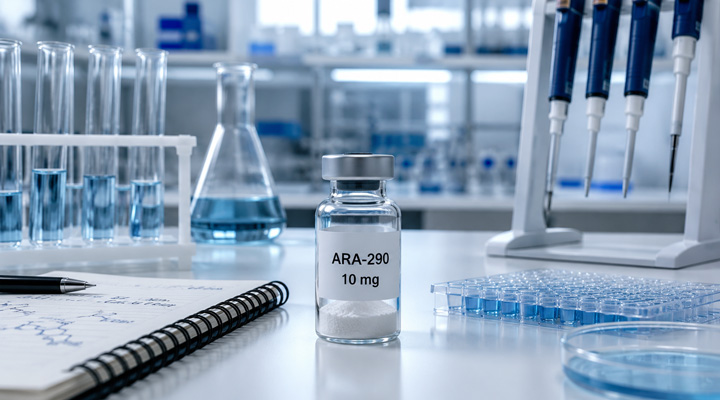
ARA-290 is commonly available from research peptide suppliers in a 10 mg vial, providing researchers with flexibility when preparing study-specific dosing protocols. It’s important to note that the 10 mg label indicates the total amount of peptide contained in the vial—not a single dose. Since ARA-290 remains an investigational compound, there is no FDA-approved dosing regimen for therapeutic use.
Typical Research Dosage Protocols
Published preclinical studies have used a wide range of dosing strategies depending on the animal model, route of administration, and research objectives. In human clinical trials investigating conditions such as neuropathic pain and small fiber neuropathy, researchers have commonly evaluated 4 mg of ARA-290 administered once daily by subcutaneous injection for several weeks under carefully controlled clinical conditions. These dosing regimens were developed exclusively for research purposes and should not be considered treatment recommendations.
A 10 mg vial allows researchers to prepare multiple experimental doses according to their study design and laboratory protocols.
Factors That Influence Dosage
The amount of ARA-290 used in research depends on several factors, including:
- The experimental model or species being studied.
- The specific research objective, such as neuroprotection, inflammation, or tissue repair.
- The route of administration.
- The duration of the study.
- The concentration required for laboratory testing.
- The methodology outlined in published scientific literature.
Because research protocols vary considerably, there is no universal dosage suitable for every study.
The Importance of Following Research Protocols
Using standardized dosing procedures is essential for producing reliable and reproducible research results. Researchers should follow validated experimental protocols, maintain accurate records of peptide preparation and administration, and ensure consistency throughout the study. Adhering to established methodologies helps reduce experimental variability and improves the quality and comparability of research findings.
ARA-290 Price at LeoLab RX
When looking to buy synthetic peptide online in the US, price transparency and product specifications are important factors for research buyers. LeoLab RX currently offers ARA-290 10 mg in a lyophilized powder format designed for laboratory research applications. The listed price for the 10 mg vial is $130.
ARA-290 10 mg Product Price
- Product: ARA-290
- Dosage strength: 10 mg per vial
- Price: $130
- Form: Lyophilized powder for research use
Buy ARA-290: Pick the Right Vial
Any peptide, including ARA-290, should be used within 4 weeks (ideally) and no longer than 6 weeks, as its potency cannot be guaranteed beyond this period.
With this in mind, I’ve created a table to help you select the right peptide vial based on three key criteria:
- Your weekly dosage
- The strength of the vial
- The optimal cost per month
This way, you can make an informed decision that balances effectiveness, convenience, and value.
| Vial Strength | Price | Best For | Estimated Monthly Cost* |
|---|---|---|---|
| ARA-290 10 mg | $130 | Researchers following lower-dose protocols (e.g., approximately 4 mg per week), where one 10 mg vial is typically sufficient for about one month of research. | $130/month |
Cost Per Milligram Comparison
For researchers comparing peptide pricing, calculating the cost per milligram provides a more accurate way to evaluate value:
- Total amount: 10 mg
- Total price: $130
- Cost per mg: approximately $13 per mg
While vial pricing can vary between suppliers, researchers should consider more than just the lowest price when selecting an ARA-290 source. Factors such as product documentation, purity verification, testing availability, and supplier reliability can significantly affect the overall value of a research peptide purchase.
Value Proposition Compared to the Broader Market
ARA-290 is a specialized research peptide with limited availability compared with more commonly studied compounds. Pricing can differ significantly between vendors depending on peptide quality standards, testing procedures, manufacturing practices, and included documentation.
LeoLab RX positions its ARA-290 product as a research-grade peptide with quality verification features, including HPLC purity verification and third-party laboratory testing information listed for the product. For researchers, these quality factors may provide additional value by supporting confidence in product identity, purity, and consistency.
When comparing synthetic peptide suppliers, researchers should evaluate the complete package—not only the upfront cost—including available testing documentation, batch information, shipping conditions, and customer support.
How to Save Money on Your ARA-290 Purchase
Researchers looking to buy ARA-290 online in the US can often reduce the overall cost of their order by taking advantage of available promotions and purchase incentives. Before completing a purchase, it is worth checking for automatic quantity discounts and available coupon codes that may help lower the final checkout price.
Quantity Discounts
For larger research orders, LeoLab RX may offer bulk pricing discounts that are automatically applied during checkout. This allows customers purchasing multiple units to receive a lower effective price without needing to manually enter a discount code.
Available discount tiers may depend on the current LeoLab RX checkout policy, product availability, and order quantity. Researchers should review the cart total before completing their purchase to see whether a quantity-based discount has been applied.
Buying multiple ARA-290 10 mg vials at once may be a cost-effective option for laboratories or research groups that require ongoing peptide supplies, as it can reduce the average purchase cost compared with placing multiple smaller orders.
Exclusive Promo Code
In addition to available quantity savings, customers can use the exclusive promotional code:
Promo Code: HCS-P1-10
Discount: 10% off
To apply the discount, enter HCS-P1-10 during checkout before completing the order. The final price should update automatically to reflect the promotional savings.
Depending on the current store policy, the promo code may be used alongside other available offers, such as quantity-based discounts. Customers should confirm the final checkout total to see which savings are applied and whether multiple promotions can be combined.
Using both bulk purchasing options and available promotional discounts can help researchers reduce the overall cost of acquiring ARA-290 while maintaining access to a reliable research peptide supplier.
Is ARA-290 Independently Lab Tested?
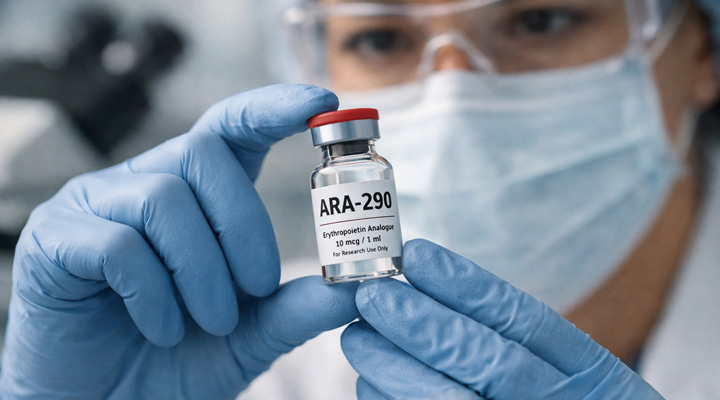
When purchasing research peptides, independent laboratory testing is one of the most important factors to consider. Third-party verification helps researchers evaluate product quality, identity, purity, and consistency before using a compound in laboratory studies.
Does LeoLab RX Provide Independent Laboratory Testing?
LeoLab RX provides laboratory testing information for its research peptides, including synthetic peptide According to the product information available, ARA-290 is supported by quality verification documentation, including analytical testing details designed to confirm product specifications. Researchers should review the available documentation for the specific batch they intend to purchase.
Certificate of Analysis (COA) and Purity Verification
A Certificate of Analysis (COA) is an important quality-control document that provides information about a peptide batch, including:
- Product identification.
- Batch or lot number.
- Testing methods used.
- Purity analysis results.
- Verification of peptide composition.
For research peptides such as ARA-290, purity testing is commonly performed using analytical methods such as high-performance liquid chromatography (HPLC), which helps determine the percentage of the intended peptide present in a sample. Mass spectrometry analysis may also be used to confirm molecular identity.
Researchers should look for current batch-specific documentation rather than relying only on general product descriptions.
Why Independent Lab Testing Matters When Buying Research Peptides
The research peptide market includes products from many different suppliers, and quality standards can vary significantly. Independent laboratory testing provides additional confidence by helping researchers verify that a product meets expected specifications.
Key benefits of third-party testing include:
- Quality assurance: Confirms that the peptide meets stated purity requirements.
- Product consistency: Helps ensure reliability between different batches.
- Research accuracy: Reduces the risk of unexpected variables affecting experimental results.
- Supplier transparency: Demonstrates a commitment to documented quality-control practices.
Before purchasing ARA-290 online in the US, researchers should consider factors beyond price alone, including available testing documentation, supplier reputation, product handling procedures, and quality verification practices.
Conclusion
ARA-290 has become a peptide of significant interest in scientific research due to its potential role in areas such as neuroprotection, inflammation regulation, tissue repair, and neuropathic pain studies. For researchers looking to buy ARA-290 online in the US, selecting a trusted supplier is an important step in ensuring access to a reliable research compound supported by transparent product information.
When evaluating synthetic peptide options, researchers should consider key factors including product specifications, pricing, dosage information, available discounts, and quality documentation. LeoLab RX offers ARA-290 10 mg with a listed price of $130, which equals approximately $13 per mg. Customers may also reduce the overall cost through available quantity discounts applied during checkout and an exclusive 10% discount using the promo code HCS-P1-10.
Because synthetic peptide remains an investigational peptide, dosage information should always be viewed in the context of published research protocols rather than as a therapeutic recommendation. Studies have explored different dosing approaches depending on the research model, objectives, and methodology, making proper protocol design essential for obtaining reliable results.
Quality verification is another critical consideration when purchasing research peptides. Independent laboratory testing, Certificate of Analysis (COA) documentation, purity verification, and batch-specific testing information can help researchers evaluate product consistency and reliability.
Ultimately, researchers should purchase ARA-290 only from reputable peptide suppliers that prioritize transparency, quality control, and proper documentation. By carefully evaluating supplier credentials, testing information, and product details, researchers can make more informed decisions when sourcing synthetic peptide for scientific research applications.
Frequently Asked Questions
-
Where can I buy ARA-290 online in the US?
You can buy synthetic peptide online in the US from LeoLab RX, a supplier specializing in research-grade peptides. LeoLab RX currently offers ARA-290 10 mg for $130 per vial. Before placing an order, you can also check for available quantity discounts and apply the exclusive promo code HCS-P1-10 to receive 10% off your purchase.
-
How much does ARA-290 cost per month?
For research protocols using lower starting dosages, a single 10 mg vial may provide approximately one month’s supply, depending on the study design and dosage protocol. At LeoLab RX, the 10 mg vial costs $130, making the estimated monthly cost for many entry-level research protocols approximately $130 before any applicable discounts.
-
What is synthetic peptide used for?
ARA-290 (Cibinetide) is an investigational peptide that has been studied for its potential neuroprotective, anti-inflammatory, and tissue-protective properties. Current research also explores its role in nerve regeneration and neuropathic pain. Synthetic peptide is intended exclusively for scientific research and is not approved for therapeutic use.
-
What dosage of ARA-290 is commonly used in research?
There is no universally accepted dosage for synthetic peptide because it is an investigational peptide. Published studies have evaluated different dosing protocols depending on the research model and objectives. Researchers should follow established scientific literature and validated laboratory protocols when designing experiments.
-
Is ARA-290 third-party lab tested?
LeoLab RX provides quality verification information for its synthetic peptide product, including laboratory testing documentation and purity verification. Researchers should review the available Certificate of Analysis (COA) and batch-specific testing information before purchasing to verify product quality.
-
Can I save money when buying ARA-290?
Yes. Customers may be eligible for automatic quantity discounts during checkout, depending on the size of their order. In addition, you can use the exclusive promo code HCS-P1-10 to receive 10% off your purchase. If permitted under the current checkout policy, the promo code may be combined with bulk discounts for additional savings.
-
Why should I buy ARA-290 from a reputable supplier?
Choosing a reputable research peptide supplier helps ensure product quality, purity, consistency, and proper documentation. Before purchasing synthetic peptide, look for suppliers that offer batch-specific Certificates of Analysis (COAs), third-party laboratory testing, transparent product specifications, and responsive customer support.