
Buy Tesamorelin online in the US
The demand for Tesamorelin has grown significantly across the United States in recent years. As interest in peptide research continues to expand, researchers and peptide enthusiasts are increasingly seeking reliable sources of high-quality Tesamorelin for scientific and investigational purposes. The convenience of online ordering, combined with improved access to laboratory-tested peptides, has made it easier than ever to purchase Tesamorelin from trusted suppliers within the US.
Tesamorelin is a synthetic peptide that belongs to the growth hormone-releasing hormone (GHRH) class. It has attracted considerable attention due to its ability to stimulate the natural production of growth hormone, making it a subject of interest in various areas of metabolic, body composition, and endocrinology research. Because of its unique mechanism of action, Tesamorelin has become one of the most sought-after peptides among researchers exploring the relationship between growth hormone secretion and physiological outcomes.
Researchers and peptide enthusiasts often choose Tesamorelin because it works by encouraging the pituitary gland to release endogenous growth hormone rather than introducing external hormones into the body. This approach has made the peptide a valuable tool in studies involving growth hormone pathways, insulin-like growth factor-1 (IGF-1) levels, and changes in body composition. Its well-documented research profile and established clinical history have further contributed to its popularity within the peptide community.
Table of Contents
What Is Tesamorelin?
Tesamorelin Peptide Overview
Tesamorelin is a synthetic peptide classified as a Growth Hormone-Releasing Hormone (GHRH) analog. It was specifically designed to mimic the activity of naturally occurring GHRH, a hormone produced by the hypothalamus that plays a critical role in regulating growth hormone secretion from the pituitary gland. By closely resembling endogenous GHRH, Tesamorelin can stimulate the body’s natural growth hormone production pathways while maintaining physiological regulatory mechanisms.
The peptide consists of a modified amino acid sequence that enhances its stability and biological activity compared to native GHRH. This increased resistance to enzymatic degradation allows Tesamorelin to remain active for a longer period, supporting a more sustained stimulation of growth hormone release.
Mechanism of Action
Tesamorelin works by binding to Growth Hormone-Releasing Hormone receptors located in the anterior pituitary gland. Upon activation of these receptors, the pituitary is stimulated to release growth hormone (GH) into circulation. Unlike exogenous growth hormone administration, Tesamorelin encourages the body to produce its own growth hormone through natural endocrine signaling pathways.
This mechanism allows growth hormone levels to rise while preserving many of the body’s normal feedback systems. As a result, Tesamorelin has become an important peptide in research involving hormone regulation, metabolic processes, and body composition.
Relationship with Growth Hormone (GH) and IGF-1 Production
One of the primary effects of Tesamorelin is its ability to increase circulating growth hormone levels. Elevated growth hormone subsequently stimulates the liver and other tissues to produce insulin-like growth factor-1 (IGF-1), a key mediator of many growth hormone-related physiological functions.
The GH/IGF-1 axis is involved in numerous biological processes, including:
- Protein synthesis and tissue growth
- Lipid metabolism and fat utilization
- Cellular repair and regeneration
- Maintenance of lean body mass
- Energy balance and metabolic regulation
Because Tesamorelin acts upstream of both GH and IGF-1 production, it has attracted considerable attention among researchers studying endocrine function and metabolic health.
Research Areas Involving Tesamorelin
Tesamorelin has been investigated in a variety of scientific and clinical settings. Some of the most common areas of research include:
- Visceral adipose tissue reduction
- Body composition changes
- Growth hormone deficiency-related conditions
- Metabolic health and insulin sensitivity
- Age-related hormonal changes
- Lipid metabolism and energy regulation
Researchers continue to explore the peptide’s potential effects on the interaction between growth hormone signaling and metabolic outcomes, making Tesamorelin one of the most extensively studied GHRH analogs currently available.
Key Characteristics of Tesamorelin
Lyophilized Peptide Format
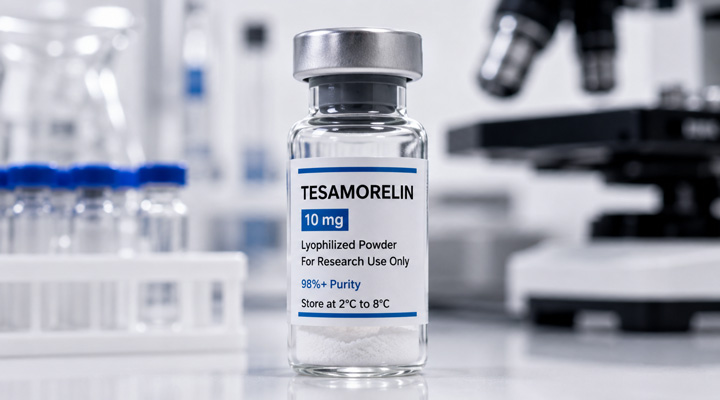
Tesamorelin is commonly supplied as a lyophilized (freeze-dried) powder. Lyophilization helps preserve peptide stability during storage and transportation by removing moisture that could contribute to degradation. Prior to use, the peptide is typically reconstituted with a suitable bacteriostatic or sterile diluent according to research protocols.
The lyophilized format offers several advantages:
- Improved long-term stability
- Reduced degradation during shipping
- Easier storage and handling
- Consistent potency when properly stored
Molecular Weight and Structure
Tesamorelin is a synthetic analog of human Growth Hormone-Releasing Hormone consisting of 44 amino acids. The peptide has an approximate molecular weight of 5,135 Daltons and incorporates specific structural modifications that improve its resistance to enzymatic breakdown compared to naturally occurring GHRH.
These modifications contribute to its extended biological activity and enhanced effectiveness in stimulating endogenous growth hormone release.
Storage Requirements
Proper storage is essential for maintaining peptide integrity and potency. Unreconstituted Tesamorelin should generally be stored in a cool, dry environment away from direct light and excessive heat. Many researchers prefer refrigeration for long-term storage.
After reconstitution, the solution is typically stored under refrigeration and protected from contamination. Storage recommendations may vary by manufacturer, making it important to follow the instructions provided with each product.
General storage guidelines include:
- Keep unopened vials in a cool, dry location
- Protect from direct sunlight
- Avoid repeated temperature fluctuations
- Refrigerate after reconstitution when applicable
- Use sterile handling techniques
Purity Standards
Purity is one of the most important factors when purchasing research peptides online. High-quality Tesamorelin products are commonly evaluated using analytical methods such as High-Performance Liquid Chromatography (HPLC) to verify identity and purity levels.
Many reputable suppliers provide Certificates of Analysis (COAs) and third-party testing results to confirm product quality. Purity levels of 98% or higher are generally considered indicative of premium-grade research peptides. Independent laboratory testing helps verify that the peptide contains the stated active ingredient and meets established quality standards for research use.
Tesamorelin Dosage Guide
Understanding common Tesamorelin dosage protocols is important for researchers evaluating study design, product requirements, and overall project costs. While dosage strategies may vary depending on research objectives and experimental parameters, several commonly referenced protocols appear throughout scientific literature and clinical investigations involving Tesamorelin.
Common Research Dosages
Typical Dosage Ranges Discussed in Clinical and Research Settings
Tesamorelin has been studied across a range of dosing protocols, with most research focusing on daily administration schedules. The specific dosage selected often depends on the objectives of the study, the duration of the research period, and the physiological outcomes being evaluated.
In many clinical investigations, daily dosing protocols have been utilized to maintain consistent stimulation of the Growth Hormone-Releasing Hormone (GHRH) pathway and support ongoing production of growth hormone (GH) and insulin-like growth factor-1 (IGF-1).
Among the most frequently discussed protocols are 1 mg and 2 mg daily dosing schedules.
1 mg Daily Protocols
A 1 mg daily protocol is commonly referenced in peptide research as a moderate dosing strategy. Researchers may choose this approach when evaluating:
- Growth hormone response
- IGF-1 production
- Body composition changes
- Metabolic biomarkers
- Long-term study outcomes
At this dosage level, a 10 mg vial would typically provide approximately 10 days of use before requiring replacement.
The lower daily dosage may also allow researchers to extend study duration while reducing overall peptide consumption.
2 mg Daily Protocols
A 2 mg daily protocol is another widely discussed dosing approach in Tesamorelin research. This protocol has frequently appeared in clinical studies investigating growth hormone secretion and visceral adipose tissue reduction.
Potential research objectives associated with higher daily dosing may include:
- Enhanced GH stimulation
- Increased IGF-1 production
- Changes in visceral fat measurements
- Body composition assessments
- Metabolic outcome analysis
At 2 mg per day, a 10 mg vial would typically last approximately 5 days.
Because peptide consumption increases significantly at this dosage level, researchers often consider overall project costs when planning longer research periods.
Duration of Research Cycles
The duration of Tesamorelin research protocols can vary substantially depending on study goals. Published investigations have evaluated Tesamorelin over periods ranging from several weeks to multiple months.
Common research timelines include:
- 4-week exploratory studies
- 8-week body composition evaluations
- 12-week metabolic assessments
- Long-term clinical investigations lasting six months or longer
Longer study durations generally require careful planning regarding product quantities, storage conditions, and budget considerations.
Factors Affecting Dosage Selection
Selecting an appropriate Tesamorelin protocol requires consideration of multiple variables. Researchers often evaluate study objectives, expected outcomes, and participant characteristics before determining a dosage strategy.
Research Objectives
The primary goal of a study often serves as the most important factor influencing dosage selection.
Examples include:
- Growth hormone pathway research
- IGF-1 response evaluation
- Metabolic health investigations
- Endocrine system studies
- Body composition research
Different research questions may require different dosing approaches to achieve meaningful results.
Body Composition Goals
Many Tesamorelin studies focus on changes in body composition, particularly the relationship between growth hormone activity and visceral adipose tissue.
Researchers investigating:
- Visceral fat reduction
- Lean body mass preservation
- Fat distribution patterns
- Metabolic markers
may design protocols that align with the specific outcomes being measured throughout the study period.
Individual Response Considerations
Variability in biological response is another important factor in research design. Growth hormone secretion, IGF-1 production, metabolic characteristics, and baseline physiological conditions can differ significantly among subjects.
As a result, researchers frequently monitor biomarkers and study outcomes throughout the investigation to evaluate response patterns and overall protocol effectiveness.
Tesamorelin Price
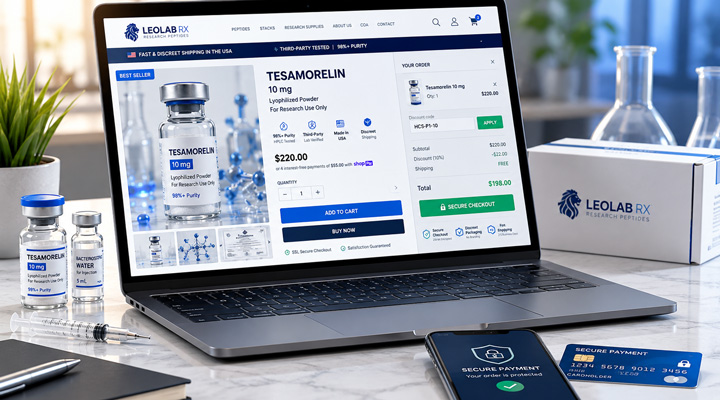
When purchasing Tesamorelin online, pricing is often one of the first factors researchers evaluate. However, the overall value of a peptide product should also take into account purity standards, third-party testing, product consistency, and supplier transparency. LeoLab RX offers Tesamorelin in a research-grade lyophilized format, supported by quality control measures designed to help ensure product reliability.
Current Product Information
At the time of writing, LeoLab RX offers the following Tesamorelin product specification:
- Product: Tesamorelin
- Strength: 10 mg per vial
- Price: $220 per vial
- Format: Lyophilized (freeze-dried) powder
- Purity: HPLC-verified at ≥98%
- Quality Assurance: Third-party tested for purity and authenticity
The lyophilized format helps preserve peptide stability during storage and transportation, while HPLC testing provides analytical verification of purity levels. Independent laboratory testing adds an additional layer of quality assurance by confirming product identity and consistency.
For researchers comparing suppliers, these factors can be just as important as the listed price, particularly when planning long-term studies that require reliable batch-to-batch consistency.
Value Considerations
When evaluating the cost of Tesamorelin, researchers often consider several factors beyond the purchase price alone:
- Cost per milligram
- Verified purity levels
- Third-party testing availability
- Product consistency
- Supplier reputation
- Available discounts and promotional offers
A lower-priced product may not always provide the same level of quality assurance as a peptide that includes comprehensive testing documentation and independent verification.
Buy Tesamorelin: Pick the Right Vial
Any peptide, including Tesamorelin, should be used within 4 weeks (ideally) and no longer than 6 weeks, as its potency cannot be guaranteed beyond this period.
With this in mind, I’ve created a table to help you select the right peptide vial based on three key criteria:
- Your weekly dosage
- The strength of the vial
- The optimal cost per month
This way, you can make an informed decision that balances effectiveness, convenience, and value.
| Vial Strength | Price (LeoLab RX) | Suitable For (Typical Research Use) | Estimated Monthly Cost (USD) |
|---|---|---|---|
| 10 mg | $220 | Low-dose / starter protocols (e.g., ~0.3–0.5 mg/day), early-stage research, extended duration studies with minimal daily usage | ~$220 per month (at ~0.3 mg/day usage) |
| 10 mg | $220 | Standard low-to-moderate protocols (e.g., ~1 mg/day), metabolic and body composition research cycles | ~$660 per month (at ~1 mg/day usage) |
| 10 mg | $220 | Moderate protocols (e.g., ~2 mg/day), intensive GH/IGF-1 pathway research and short-cycle studies | ~$1,320 per month (at ~2 mg/day usage) |
| 10 mg | $220 | Short-duration high-intensity protocols, rapid-cycle experimental designs requiring higher daily consumption | Varies significantly depending on study length (typically $1,320+ per month equivalent) |
Cost Per Milligram
Researchers may also compare products based on the effective cost per milligram.
For a 10 mg vial priced at $220:
- Total peptide content: 10 mg
- Price per vial: $220
- Effective cost per mg: $22
This calculation can be useful when comparing Tesamorelin products from different suppliers that may offer varying vial sizes or concentrations.
How to Save Money When Buying Tesamorelin
For researchers planning long-term projects, peptide costs can quickly add up, particularly when multiple vials are required to support extended research protocols. Fortunately, there are several ways to reduce the overall cost of purchasing Tesamorelin online. By taking advantage of quantity-based discounts and promotional coupon codes, researchers can significantly lower their effective cost per vial and maximize the value of each purchase.
Quantity Discounts at Checkout
Many peptide suppliers offer volume-based discounts that automatically apply during checkout when customers purchase multiple products or larger order quantities. While discount structures may vary over time, bulk purchasing is often one of the simplest ways to reduce overall research costs.
How Volume Discounts Work
Quantity discounts are designed to reward larger purchases by reducing the effective cost of each vial. Instead of placing multiple small orders throughout a research project, customers can often achieve better pricing by purchasing several vials at once.
Potential advantages of bulk ordering include:
- Lower effective cost per vial
- Reduced shipping costs per unit
- Fewer reorders during long-term studies
- Consistent product supply from the same batch when available
- Greater overall savings compared to multiple smaller purchases
Researchers conducting multi-month studies frequently calculate their total peptide requirements in advance to determine whether larger orders may provide better value.
Benefits of Purchasing Multiple Vials
Buying multiple vials in a single order can offer both financial and logistical advantages.
Key benefits include:
- Improved budget efficiency
- Reduced risk of supply interruptions
- Less time spent placing repeat orders
- Potential access to larger checkout discounts
- Better planning for extended research timelines
For projects involving daily Tesamorelin administration, purchasing an adequate supply at the beginning of the study may help simplify inventory management and reduce overall costs.
Exclusive HCS-Pharma Coupon Code
In addition to any quantity-based savings that may be available, researchers can further reduce costs by using the exclusive HCS-Pharma promotional code:
Promo Code: HCS-P1-10
This coupon provides an additional 10% discount on eligible orders, making it an effective way to lower the final purchase price of Tesamorelin and other research peptides.
Example Savings Calculations
The following examples illustrate how the HCS-P1-10 promo code can reduce the cost of an order before any additional bulk discounts are considered.
| Order Value | Discount | Final Price |
|---|---|---|
| $220 | 10% | $198 |
| $440 | 10% | $396 |
| $1,100 | 10% | $990 |
Savings by Order Size
Researchers placing larger orders can realize increasingly significant dollar savings:
| Order Total | Savings with HCS-P1-10 |
|---|---|
| $220 | $22 |
| $440 | $44 |
| $660 | $66 |
| $1,100 | $110 |
| $2,200 | $220 |
As order values increase, the discount becomes even more impactful, particularly for long-term research projects requiring multiple vials.
Combining Bulk Discounts with Promo Codes
One of the most effective strategies for reducing Tesamorelin costs is combining available volume discounts with promotional coupon codes whenever permitted during checkout.
Potential Maximum Savings
When a supplier allows both discount methods to be applied together, researchers may benefit from:
- Reduced per-vial pricing through bulk purchasing
- Additional percentage savings from the coupon code
- Lower overall study costs
- Greater purchasing efficiency
The exact savings will depend on the current checkout discount structure and the total order value.
Best Purchasing Strategies for Long-Term Research Projects
Researchers planning studies lasting several months often use a strategic purchasing approach to maximize value.
Common cost-saving strategies include:
- Estimate total peptide requirements before ordering.
- Purchase enough vials to cover the entire research period when feasible.
- Take advantage of available quantity discounts.
- Apply the HCS-P1-10 promo code during checkout.
- Compare the final effective cost per milligram rather than focusing solely on the listed vial price.
- Prioritize suppliers that combine competitive pricing with documented purity testing and third-party verification.
For example, a researcher conducting a 90-day protocol may require substantially more product than someone running a short-term study. In such cases, bulk ordering combined with promotional discounts can generate meaningful savings while helping ensure uninterrupted access to research materials throughout the project.
By leveraging both checkout discounts and the exclusive HCS-P1-10 coupon code, researchers can reduce the total cost of purchasing Tesamorelin online while maintaining access to high-quality, laboratory-tested peptide products.
Independent Laboratory Testing and Quality Assurance
When purchasing research peptides online, product quality should be one of the most important considerations. While pricing and availability are often key factors in the purchasing process, independent laboratory testing and transparent quality assurance practices help researchers verify that a product meets the specifications advertised by the supplier.
For peptides such as Tesamorelin, third-party testing and supporting analytical documentation provide additional confidence regarding product identity, purity, and consistency. These quality control measures can be particularly valuable for researchers seeking reliable and reproducible results.
Is Tesamorelin Independently Tested?
According to the product information provided by LeoLab RX, Tesamorelin is third-party tested for purity and authenticity. Independent testing involves sending product samples to an external laboratory that is not directly involved in the manufacturing or sale of the peptide.
This additional level of verification helps confirm that the product:
- Contains the advertised peptide
- Meets stated purity specifications
- Has been analyzed using recognized laboratory methods
- Maintains consistency across production batches
For researchers evaluating peptide suppliers, the availability of third-party testing is often viewed as a strong indicator of a company’s commitment to quality control and transparency.
Why Third-Party Testing Matters
Independent laboratory testing serves as one of the most effective methods for verifying peptide quality. Rather than relying solely on internal quality assessments, third-party analysis provides objective confirmation of product specifications.
Identity Verification
One of the primary goals of third-party testing is to confirm the identity of the peptide being sold.
Identity verification helps determine that:
- The product contains Tesamorelin
- The peptide sequence matches the intended compound
- The sample is not substituted with another material
- Product labeling accurately reflects the contents
Accurate identification is essential for maintaining research integrity and ensuring that studies are conducted using the intended peptide.
Purity Confirmation
Purity testing evaluates the percentage of the sample that consists of the target peptide compared to impurities, degradation products, or manufacturing byproducts.
Higher purity levels generally indicate:
- Greater product consistency
- Reduced contamination
- Improved reliability in research applications
- Better manufacturing quality control
Many premium research peptides are tested using High-Performance Liquid Chromatography (HPLC), one of the most widely accepted analytical methods for assessing peptide purity.
Protection Against Mislabeled Peptides
The peptide market contains products that can vary significantly in quality and accuracy. Independent testing helps reduce the risk of purchasing products that may be:
- Incorrectly labeled
- Underdosed
- Contaminated
- Inconsistent with advertised specifications
Researchers who prioritize third-party testing can often make more informed purchasing decisions and reduce uncertainty regarding product quality.
Consistency Between Batches
Consistency is critical for research projects that span multiple weeks or months. Variations between production batches may introduce unwanted variables that can affect study outcomes.
Third-party testing helps verify that:
- Different batches meet the same purity standards
- Product quality remains consistent over time
- Manufacturing processes maintain reliable specifications
- Researchers receive reproducible materials throughout a project
Reliable batch-to-batch consistency is one of the hallmarks of a reputable peptide supplier.
Understanding Certificates of Analysis (COAs)
A Certificate of Analysis (COA) is a laboratory document that summarizes the results of analytical testing performed on a specific product batch. Reputable peptide suppliers frequently provide COAs to demonstrate transparency and support their quality claims.
Researchers should review available COAs whenever possible before making a purchase.
What Information Should Appear on a COA?
While formats may vary between laboratories, a comprehensive Certificate of Analysis commonly includes:
- Product name
- Batch or lot number
- Date of analysis
- Testing methodology
- Purity results
- Product identification results
- Laboratory information
- Analyst approval or verification
These details help researchers confirm that testing was performed on the specific batch being purchased.
HPLC Testing
High-Performance Liquid Chromatography (HPLC) is one of the most widely used analytical techniques for evaluating peptide purity.
HPLC testing can help determine:
- Percentage purity
- Presence of impurities
- Product consistency
- Manufacturing quality
Because of its accuracy and reliability, HPLC analysis has become a standard quality-control tool throughout the peptide industry.
Purity Percentages
Purity percentages indicate how much of the tested sample consists of the intended peptide compound.
For example:
- 95% purity indicates that approximately 95% of the sample contains the target peptide.
- 98% purity indicates a higher concentration of the desired compound and fewer impurities.
Premium research-grade peptides are often advertised with purity levels of 98% or higher, supported by laboratory testing documentation.
When reviewing purity results, researchers should always look for corresponding laboratory data rather than relying solely on marketing claims.
Batch Traceability
Batch traceability refers to the ability to link testing results directly to a specific production lot.
A traceable batch system helps researchers:
- Verify the exact product tested
- Confirm consistency between orders
- Identify manufacturing records if needed
- Review quality data for specific production runs
Batch numbers listed on product labels should correspond with the information provided on the Certificate of Analysis. This connection provides an additional layer of transparency and accountability throughout the manufacturing and testing process.
By choosing suppliers that offer third-party testing, HPLC verification, and accessible Certificates of Analysis, researchers can make more informed purchasing decisions and gain greater confidence in the quality, purity, and consistency of the Tesamorelin they purchase online.
Conclusion
Tesamorelin has become one of the most widely researched Growth Hormone-Releasing Hormone (GHRH) analogs available today. Its ability to stimulate endogenous growth hormone production and support the GH/IGF-1 pathway has made it a popular subject of investigation in studies involving body composition, visceral fat reduction, metabolic health, and endocrine function. As interest in peptide research continues to grow, Tesamorelin remains a leading option for researchers seeking a well-established and extensively studied peptide.
When purchasing Tesamorelin online in the United States, product quality should be a primary consideration. While pricing is important, factors such as purity verification, independent laboratory testing, and supplier transparency often play an even greater role in ensuring a reliable research experience. Choosing a supplier that provides third-party testing, High-Performance Liquid Chromatography (HPLC) analysis, and accessible Certificates of Analysis (COAs) can help researchers verify product identity, purity, and consistency before making a purchase.
Throughout this guide, we’ve covered several key factors that researchers should evaluate when buying Tesamorelin online:
- Understanding how Tesamorelin works as a synthetic GHRH analog
- Reviewing common research dosage protocols and product usage estimates
- Evaluating pricing for Tesamorelin 10 mg vials
- Comparing cost-per-milligram and long-term research expenses
- Identifying opportunities to save through quantity discounts
- Using the exclusive HCS-P1-10 coupon code for an additional 10% discount
- Verifying quality through third-party testing and laboratory documentation
- Following proper storage and handling procedures to maintain peptide integrity
Researchers planning short-term or long-term studies should also consider the financial benefits of strategic purchasing. Buying multiple vials at once may reduce overall costs through volume-based pricing, while promotional discounts can further lower the effective cost per vial. Combining these savings opportunities with a supplier that maintains strong quality assurance standards can provide the best overall value.
Frequently Asked Questions (FAQ)
-
Where Can I Buy Tesamorelin Online in the US?
Tesamorelin can be purchased online in the United States from trusted peptide suppliers such as LeoLab RX. At the time of writing, LeoLab RX offers Tesamorelin 10 mg in a lyophilized powder format for $220 per vial, with HPLC-verified purity of at least 98% and third-party testing for purity and authenticity
-
What Is the Tesamorelin Cost Per Month?
For researchers using a starter protocol of approximately 0.3 mg per day, a single 10 mg vial may last for roughly one month. Based on the current LeoLab RX pricing, the estimated monthly cost is approximately $220 per month, before any available discounts or promotional offers are applied.
-
Does LeoLab RX Provide Third-Party Testing?
Yes. According to the product information provided by LeoLab RX, Tesamorelin is third-party tested for purity and authenticity. Independent testing helps verify product identity, quality, and consistency.
-
What Purity Level Does Tesamorelin Have?
LeoLab RX states that its Tesamorelin is tested using High-Performance Liquid Chromatography (HPLC) and has a purity level of 98% or higher.
-
What Is a Certificate of Analysis (COA)?
A Certificate of Analysis (COA) is a laboratory document that provides information about a specific batch of Tesamorelin, including purity results, testing methods, batch numbers, and product identification data. COAs help researchers verify product quality before purchase.
-
How Long Does a 10 mg Vial of Tesamorelin Last?
The duration depends on the protocol being used. For example:
At 1 mg per day, a 10 mg vial lasts approximately 10 days.
At 0.5 mg per day, a vial lasts approximately 20 days.
At 0.3 mg per day, a vial may last about one month.
At 2 mg per day, a vial lasts approximately 5 days. -
Can I Save Money When Buying Tesamorelin?
Yes. Researchers may be able to reduce costs through volume discounts available at checkout. Additionally, the exclusive coupon code HCS-P1-10 provides an extra 10% discount, helping lower the overall purchase price.